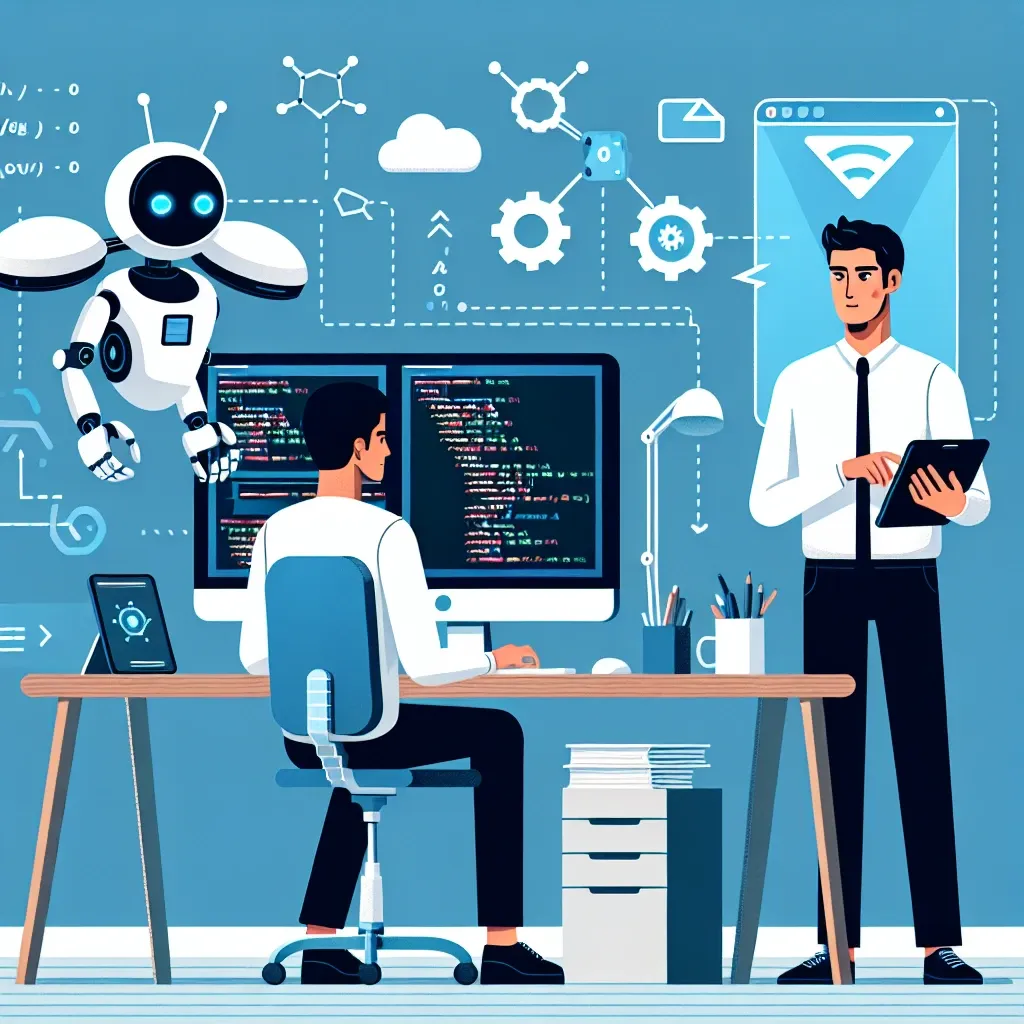
The Evolution of API Development Tools
The landscape of software development has undergone a dramatic transformation over the past decade, with Application Programming Interfaces (APIs) becoming the backbone of modern digital infrastructure. As applications grow increasingly complex and interconnected, developers face mounting pressure to deliver high-quality software faster than ever before. Enter Postman’s revolutionary AI features – a game-changing suite of tools that promises to revolutionize how developers approach API testing, documentation, and workflow optimization.
In an era where time-to-market can make or break a product’s success, the integration of artificial intelligence into development tools represents more than just a technological advancement; it’s a fundamental shift toward intelligent, automated workflows that amplify human creativity rather than replace it.
Understanding Postman’s AI-Powered Ecosystem
Postman, already recognized as the world’s leading API platform, has strategically integrated artificial intelligence across multiple touchpoints of the development lifecycle. These AI features aren’t merely cosmetic additions but represent deep, thoughtful integrations designed to address real pain points that developers encounter daily.
Intelligent Test Generation
One of the most significant breakthroughs in Postman’s AI arsenal is its intelligent test generation capability. Traditional API testing often requires developers to manually craft extensive test scripts, a process that can be both time-consuming and prone to human oversight. Postman’s AI analyzes API endpoints, request structures, and response patterns to automatically generate comprehensive test suites.
This feature leverages machine learning algorithms trained on millions of API interactions to predict potential failure scenarios, edge cases, and validation requirements. The result is a dramatic reduction in the time spent writing boilerplate test code, allowing developers to focus on higher-level logic and business requirements.
Smart Documentation Assistant
Documentation has long been the Achilles’ heel of software development – crucial for project success yet often neglected due to time constraints. Postman’s AI documentation assistant transforms this challenge by automatically generating detailed, contextual documentation based on API structure and usage patterns.
The AI analyzes request parameters, response schemas, and endpoint behaviors to create human-readable documentation that stays synchronized with code changes. This ensures that documentation remains accurate and up-to-date without requiring constant manual intervention from development teams.
Real-World Impact on Developer Workflows
To truly appreciate the transformative potential of Postman’s AI features, it’s essential to examine their impact through the lens of actual developer experiences. Consider Sarah, a backend developer at a fast-growing fintech startup, who previously spent approximately 40% of her time writing and maintaining API tests.
With Postman’s intelligent test generation, Sarah now allocates that time to feature development and architectural improvements. The AI doesn’t just save time; it enhances test coverage by identifying scenarios that human developers might overlook. This comprehensive approach has resulted in a 60% reduction in production bugs related to API integrations.
Enhanced Collaboration Through AI-Driven Insights
Modern software development is inherently collaborative, involving cross-functional teams with varying levels of technical expertise. Postman’s AI features bridge communication gaps by providing intelligent insights that translate technical API details into business-friendly language.
Product managers can now understand API performance implications without deep technical knowledge, while QA engineers receive AI-generated test scenarios that align with user journey expectations. This democratization of technical information accelerates decision-making and reduces the friction often associated with cross-team collaboration.
Performance Optimization Through Predictive Analytics
Beyond immediate productivity gains, Postman’s AI features introduce a predictive dimension to API development. The platform’s machine learning capabilities analyze historical performance data, usage patterns, and error rates to provide proactive recommendations for optimization.
Intelligent Load Testing Recommendations
Traditional load testing often relies on educated guesses about traffic patterns and performance thresholds. Postman’s AI examines actual usage data to recommend realistic load testing scenarios, helping developers identify potential bottlenecks before they impact users.
The system can predict which endpoints are likely to experience high traffic based on business logic and historical trends, enabling teams to prioritize optimization efforts where they’ll have the greatest impact.
Automated Security Vulnerability Detection
Security considerations in API development require constant vigilance and expertise that not all development teams possess. Postman’s AI continuously scans API configurations, request patterns, and authentication mechanisms to identify potential security vulnerabilities.
This proactive approach to security helps teams address issues during development rather than after deployment, significantly reducing the risk of data breaches and compliance violations.
The Future of AI-Enhanced Development
As artificial intelligence continues to evolve, the potential applications within development tools expand exponentially. Postman’s current AI features represent just the beginning of a broader transformation toward intelligent development environments.
Natural Language API Interaction
Future iterations may include natural language processing capabilities that allow developers to describe desired API behavior in plain English, with the AI translating these descriptions into functional code and tests. This could dramatically lower the barrier to entry for API development and enable domain experts to contribute more directly to technical implementation.
Adaptive Learning Systems
The next generation of AI features will likely incorporate adaptive learning systems that understand individual developer preferences and project-specific requirements. These systems could customize recommendations, automate routine tasks based on personal workflows, and provide increasingly personalized development experiences.
Implementation Strategies for Development Teams
Successfully integrating Postman’s AI features requires thoughtful planning and gradual adoption strategies. Teams should begin by identifying their most time-consuming manual processes and prioritizing AI automation in those areas.
Gradual Integration Approach
Rather than attempting to implement all AI features simultaneously, successful teams typically adopt a phased approach. Starting with test generation or documentation assistance allows developers to experience immediate benefits while building confidence in AI-generated outputs.
Team leaders should establish clear guidelines for reviewing and validating AI-generated content, ensuring that automation enhances rather than replaces human judgment and expertise.
Training and Skill Development
As AI becomes more prevalent in development tools, teams must invest in understanding how to effectively collaborate with intelligent systems. This includes learning to provide clear inputs for AI processing, interpreting AI-generated recommendations, and knowing when to override automated suggestions.
Measuring Success and ROI
The impact of AI features on developer productivity can be quantified through various metrics, including reduced time-to-market, improved test coverage, decreased bug rates, and enhanced team satisfaction. Organizations should establish baseline measurements before AI implementation to accurately assess improvements.
Key performance indicators might include average time spent on routine tasks, frequency of production issues, documentation completeness, and overall development velocity. These metrics provide concrete evidence of AI’s value and help justify continued investment in intelligent development tools.
Overcoming Common Challenges
While Postman’s AI features offer significant benefits, teams may encounter challenges during adoption. Common concerns include over-reliance on automation, quality control of AI-generated content, and integration with existing workflows.
Successful implementation requires maintaining a balance between automation and human oversight, establishing clear review processes for AI outputs, and gradually building trust in intelligent systems through consistent positive experiences.
Industry Impact and Competitive Advantages
Organizations that effectively leverage AI-enhanced development tools gain significant competitive advantages in terms of development speed, software quality, and team efficiency. As these tools become more sophisticated, the gap between early adopters and laggards will likely widen.
Companies that embrace AI-driven development practices position themselves to respond more quickly to market changes, deliver higher-quality products, and attract top talent who prefer working with cutting-edge tools and technologies.
Conclusion: Embracing the AI-Powered Future
Postman’s AI features represent a fundamental shift in how developers approach API development, testing, and maintenance. By automating routine tasks, providing intelligent insights, and enhancing collaboration, these tools enable development teams to focus on innovation and problem-solving rather than repetitive manual work.
The future of software development lies in the intelligent collaboration between human creativity and artificial intelligence capabilities. Teams that embrace this partnership will find themselves better equipped to meet the growing demands of modern software development while maintaining high standards of quality and efficiency.
As AI technology continues to advance, the possibilities for enhancing developer productivity are virtually limitless. Postman’s current AI features provide a glimpse into this future, offering practical, immediate benefits while laying the groundwork for even more transformative capabilities to come.
Leave a Reply